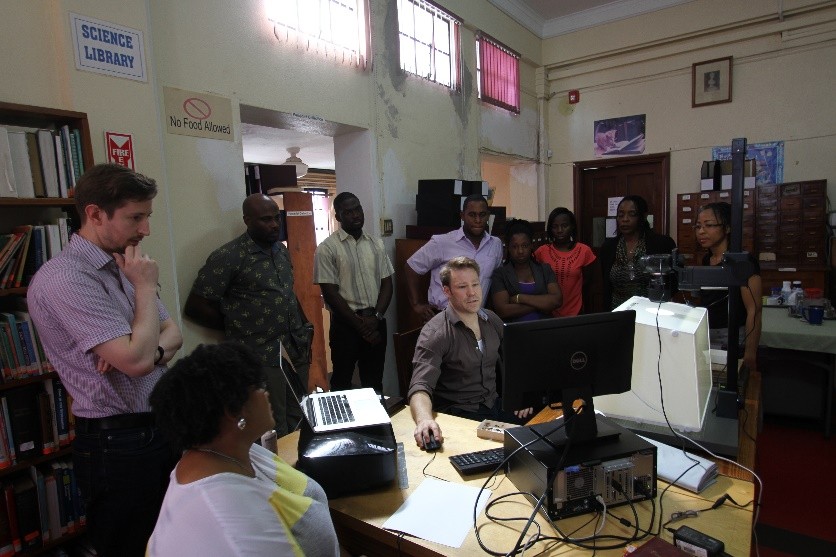
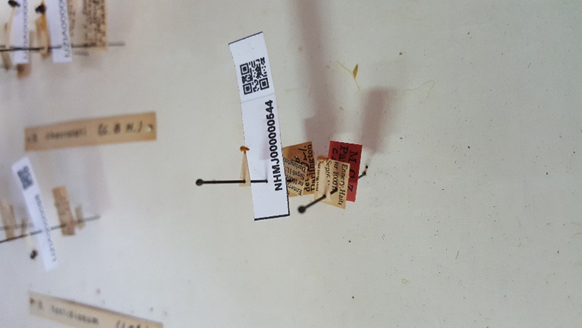
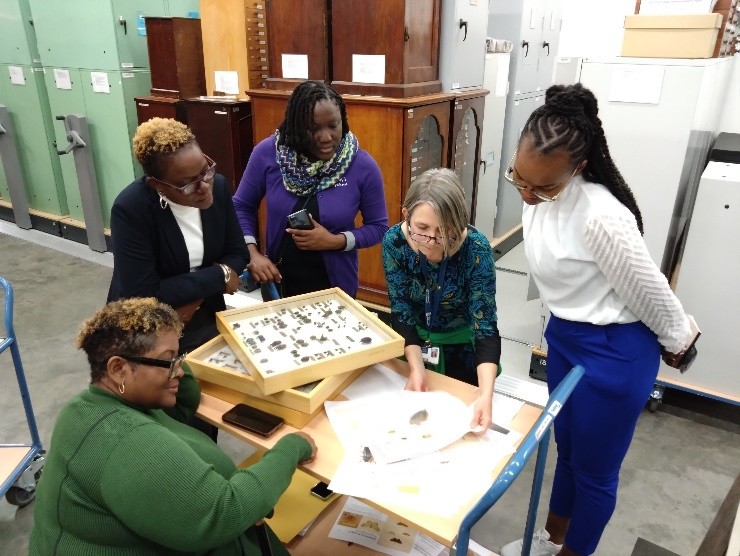
The Zoology Department is actively working on the digitization of its collections to enhance accessibility and preservation. While this process began nearly two decades ago, a significant milestone was achieved in 2018 with the Biodiversity Information for Development (BID) project, which accelerated digitization efforts.
As part of this initiative, the department adopted Specify, a user-friendly database software, providing an efficient platform for data entry and remote support with partners from the Natural History Museum (UK).
Additionally, the project facilitated the publication of data on specific insect orders to the Global Biodiversity Information Facility (GBIF), making this information openly and freely accessible to researchers and the public worldwide.
Art & Natural History Collections: The Jamaican Giant Galliwasp
Project Partners: UWI Museum, Natural History Museum of Jamaica, and Edna Manley College for the Visual and Performing Arts, School of Visual Arts.
Supported by the Edna Manley College of the Visual and Performing Arts, this interdisciplinary project aims to preserve and share knowledge of the rare, over 170-year-old Jamaican Galliwasp specimen through the creation of detailed watercolor illustrations from multiple perspectives. By fostering collaboration between artists, museum curators, and herpetologists, the project will reduce the need to handle the fragile specimen, support museum conservation best practices, and create high-quality reference collections for use by The University of the West Indies, the Natural History Museum of Jamaica, and the Edna Manley College. The resulting artworks will enhance education, research, and public engagement while culminating in an exhibition at the University of the West Indies Museum.
GALLIWASP REPATRIATION PROJECT
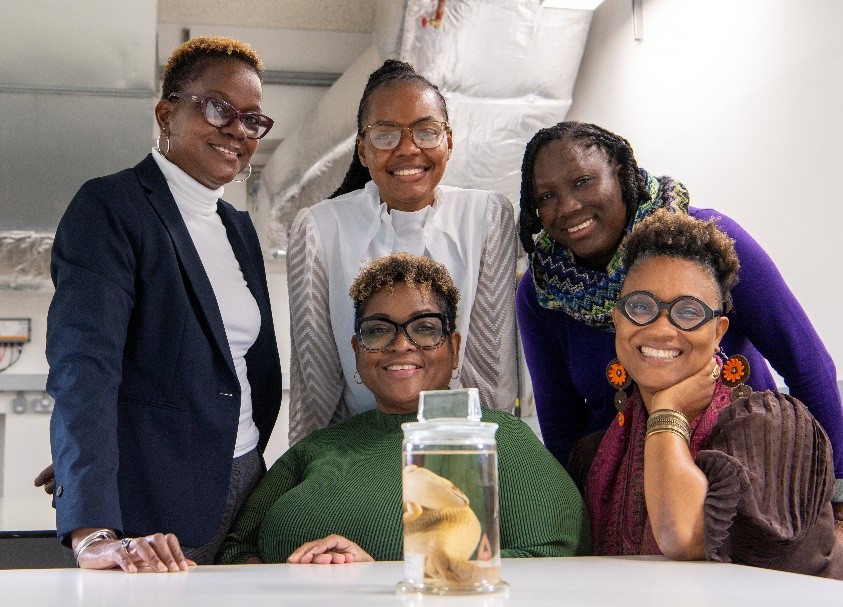
The Zoologist and Entomologist were part of a five-member team from the University of the West Indies (UWI) and the Natural History Museum of Jamaica (NHMJ) that visited Glasgow, Scotland on a mission to repatriate the Jamaican giant galliwasp, Celestus occiduus in 2024. This resulted from an invitation extended by Mike Rutherford, Curator of Zoology & Anatomy at the Hunterian museum at the University of Glasgow, Scotland. The return of the galliwasp to Jamaica was a gesture of goodwill and symbolised the potential for further repatriations especially of data about Jamaican and other Caribbean specimens in their collections. The Natural History Museum of Jamaica (NHMJ) was identified as the best location for housing the returned specimen based on its role as the national collections for Jamaican flora and fauna and had no prior specimen of the Jamaican Giant Galliwasp in its holdings. To formalise the agreement between the UWI and the Institute of Jamaica (IOJ) for the permanent housing of the galliwasp, a Memorandum of Understanding will be finalised between both institutions.
The Jamaican representatives viewing the Jamaican Giant Galliwasp
in Glasgow.
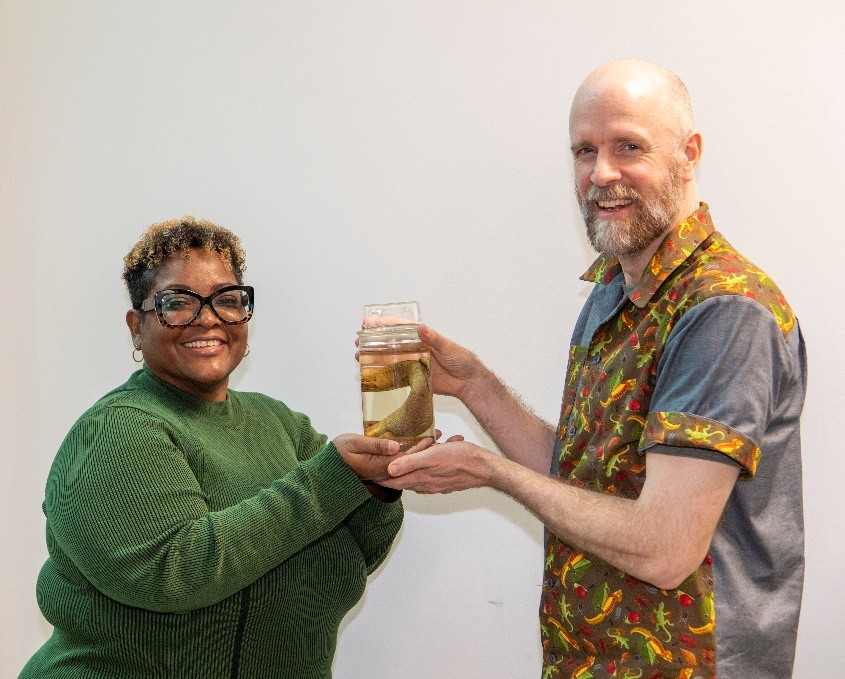
Miss Elizabeth Morrison (Zoologist) receiving the specimen from Mike
Rutherford (Zoology and Anatomy Curator).
The Jamaican Team viewing the Hunterian Entomology Collections
The team appearing in a Scottish Newspaper, The Scotsman.